The Chancellor
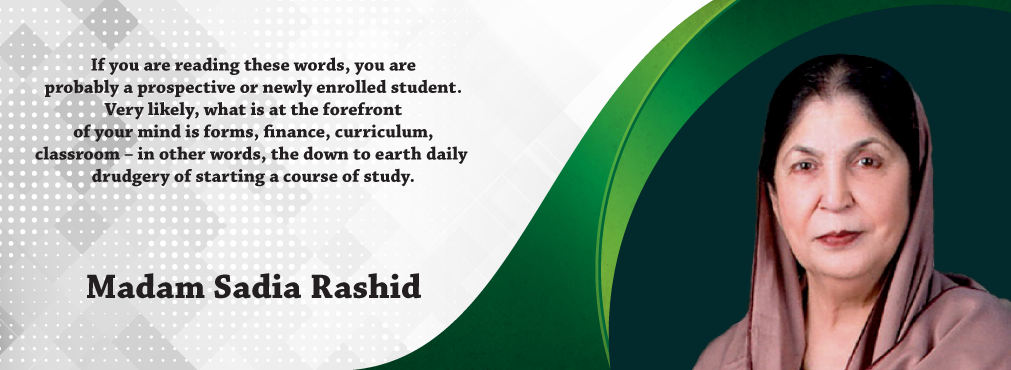
Chancellor’s Message
If you are reading these words, you are probably a prospective or newly enrolled student. Very likely, what is at the forefront of your mind are forms, finances, the curriculum, and classrooms—in other words, the down-to-earth daily realities of starting a course of study. But sometimes, in quieter moments, you may have wondered: Why education? Why study at all?
Many might answer, “Because I must earn a living, and education will improve my chances of getting a better job or making a better living.” But does that mean that the fortunate few who do not need to earn a living do not need an education? Surely there is more to education than mere material success—however important that may be.
The most fundamental quality that distinguishes human beings from the rest of the animal kingdom is the ability to think rationally, to ask questions, to seek answers, and to make informed choices. Education is more than simply learning facts; it is learning how to learn. It is not only about finding answers but also about knowing which questions to ask. Classes, books, research, tests, examinations, and degrees are all important—but they are means, not ends. Ultimately, what we seek is not only knowledge and learning, but wisdom.
What we, as a university, can do is provide the best possible resources: the environment, the courses, the teachers, and the equipment. It is then up to you to make the best use of them in pursuing your goals. The Founder of your University—and indeed of Hamdard Pakistan—Shaheed Hakim Mohammed Said, set an inspiring example for us all. The path to success lies in hard work and integrity. Starting with just two rented rooms and some rented furniture, he built Hamdard into the nationally respected organization with an international presence that it is today. He never charged fees to the millions of patients he treated, choosing instead to sell his herbal medicines at very reasonable prices. When he achieved material success, he transformed Hamdard into a Waqf (Islamic trust), whose profits are used to support widows, orphans, and those in need of healthcare, livelihood, or education. Alongside his lifelong commitment to philanthropy and healthcare, he fulfilled his dream of promoting education from the school level to the university level.